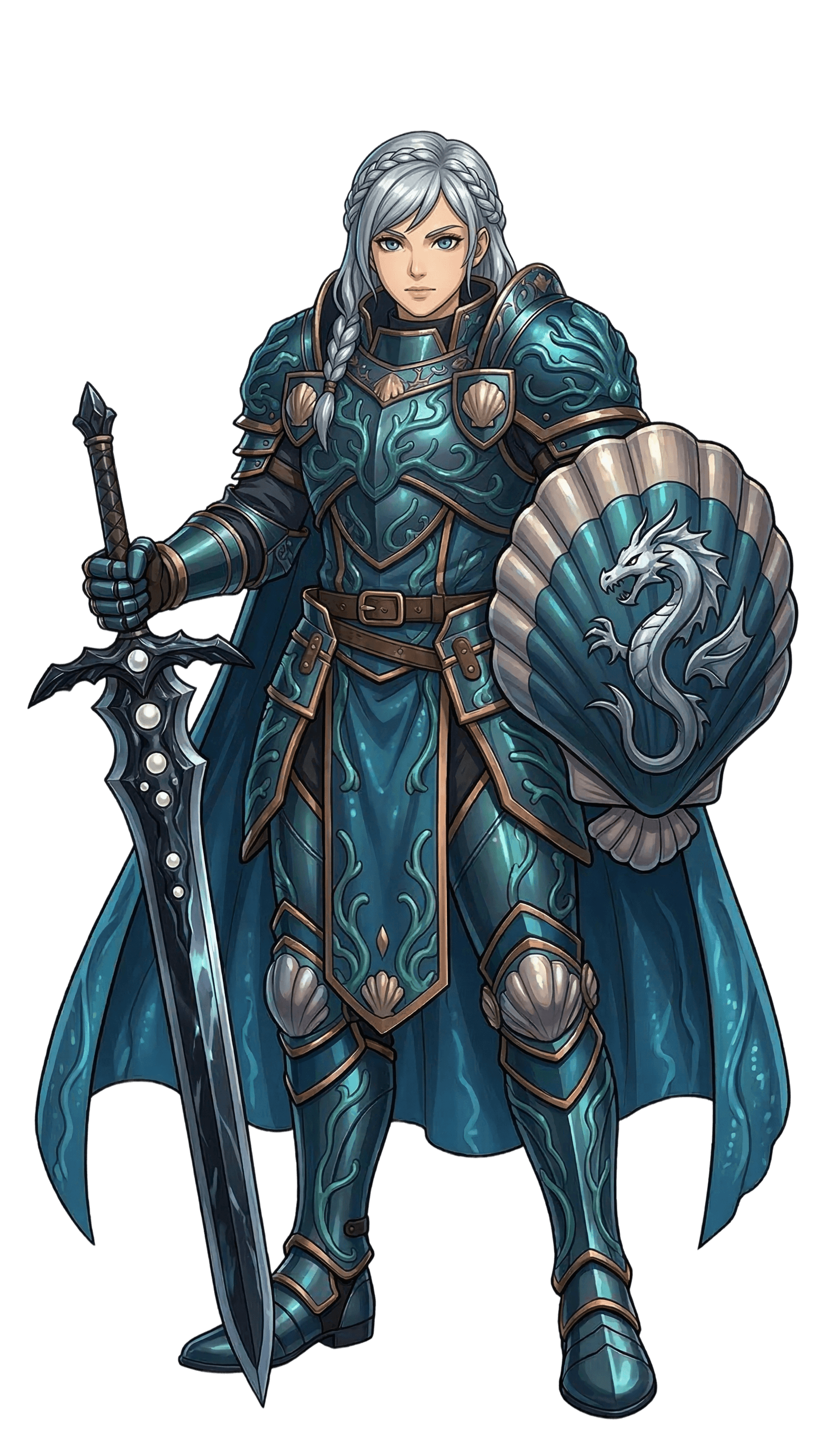
The Chronicle of Elariam
The World Before the Fall
Two moons light the skies of Valdris. The larger, Selune, bathes the plains in silver light that peasants swear can mend shallow wounds. The smaller, Karveth, only shows on windless nights, and when its red glow touches the mountains, the wolves howl until dawn. Beneath that divided sky, Elariam was born: the oldest of all mortal kingdoms.
Thalion, the First Forger, drove his sword into the peak of Mount Areth and declared the land his own. He possessed no army, no gold. Only three companions: a mage who spoke to fire, a priest who heard the dead, and a smith who spoke to stone, whose hands shaped iron as others shape clay. From that fourth companion's forges came the first Golems, servants of rock who obeyed runes carved into their chests. From those four rose an empire the centuries would learn to fear.
The pact between them was simple. As long as the four pillars remained in balance, the sword, the faith, the arcane, and the forge, Elariam would stand unbreakable. Each pillar sustained the others: the sword protected, the faith healed and blessed, the arcane pushed the boundaries of the possible, and the forge built what the rest required. That pact held for five hundred and twelve years. Then it held for nothing at all.
The Fall of the Last King
Kaelric III died without heirs on an autumn Tuesday. He was sitting on the throne when it happened, crown still upon his head, an unfinished letter resting between cold fingers. The chroniclers say poison. The priests insist it was a curse. The soldiers guarding the door never forgot the laughter they heard coming from inside the walls.
Without a king to hold the order, the four pillars turned against each other. The Sword Order claimed the throne by right of strength. The Arcane Circle argued that magic had always been the true foundation of the realm. The master-smiths of the Forge demanded equal voice, weary of centuries forging the world without the right to govern it. And the priests of the Eternal Faith, who should have mediated the conflict, made the mistake that sealed the fate of all: they chose a side. They blessed the Sword Order as the throne's rightful heir and condemned the remaining factions as heretics.
The decision split the kingdom in two. Before the next noon, the first swords had been drawn. Before nightfall, the throne room was slick with blood and the crown had vanished as though it had never existed. Some say it lies buried in the Catacombs of Vel. Others swear it was melted down and reforged into six blades, each one capable of killing a king. And there are those who whisper that the crown was never real, that it was nothing but an illusion maintained by the Arcane Circle for five centuries so that men would have something to kneel before.
Twenty Years of Ash
What followed was not one war but three waged at once. The Sword Order, strengthened by the priests' blessing, sealed the royal armory to keep the mages from the ancient artifacts. The Arcane Circle retaliated in the only way they knew: they flooded the mines of Krath, cutting off the black steel supply. The Golems the Forge-masters kept in those depths, servants of stone carved for eternal labor, found themselves drowning without warning and without mercy.
Twelve Golems perished in the flood. The survivors tore out their servitude runes and turned upon their own creators. The forges of Krath, pride of two hundred years of human craft, burned for three days. Not by enemy fire, but by the silent fury of creatures who discovered, in the same instant, what pain was and what hatred was. When the Golems marched into the mountains, they did not leave behind escaped servants. They left behind a people of master-smiths stripped of their works, their tools, and their dignity. The Children of the Forge survived. But the guilt of what they created never left them.
As for the priests, their alliance with the Order cost them everything. The Eternal Faith fractured: some remained loyal to the knights, some deserted to the Circle seeking protection, and those who tried to remain neutral were slaughtered by both sides. By the war's end, not a single temple stood anywhere on the continent. Faith did not vanish from Elariam, but it lost its voice, its structure, and its power. Today, priests wander the roads alone, healers without congregation, prophets without pulpit.
The Great War devoured everything it touched. Rivers changed course when the mages boiled their waters. Forests turned to desert when the Order poured alchemical fire to encircle enemy positions. The city of Miravel, home to a hundred thousand souls, simply ceased to exist one night. To this day, anyone who passes through that place hears children singing beneath the earth.
When it ended, there was no peace treaty. There was only exhaustion. The three remaining sides stopped fighting because there were not enough soldiers left to hold a front line. The continent shattered into nameless territories, ruled by whoever held the sharpest blade that week.
What Remained
The Sword Order
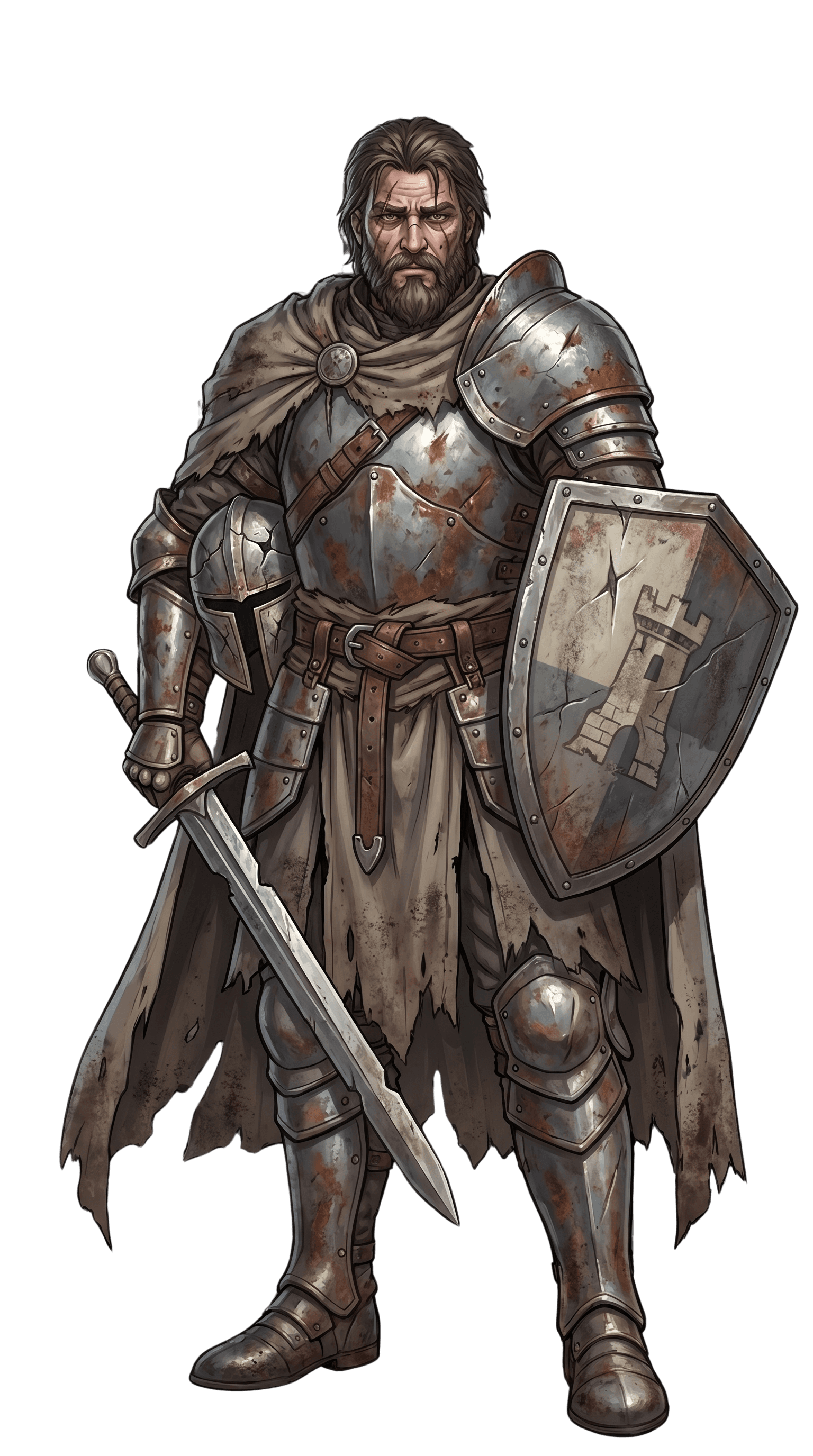
The knights who survived the war refuse to remove their armor. Some veterans have not shown their faces in a decade. They say it is shame, or disfigurement, or that they simply forgot what their own reflection looked like. The priests' blessing became a curse: without the Eternal Faith to absolve them, they carry the weight of every life taken with no promise of redemption. Split into companies of twenty to fifty mercenaries, they roam the roads offering protection in exchange for gold or food.
They keep a rigid code: never strike first, never kill those who surrender, never abandon a contract. But the code applies only among themselves. To the rest of the world, they are the finest blade money can buy.
The Arcane Circle
The Crystal Tower collapsed in the seventh year of the war. It was not the enemy's doing. The mages destroyed it themselves, choosing to bury their secrets rather than let them fall into foreign hands. But the secrets outlived their keepers. In the years that followed, every mage who remained tried to kill the others to gather what they knew. Paranoia proved more lethal than any army.
Today, the Arcane Circle does not exist. The last known mage died a decade ago, a dagger in his back and an unfinished scroll in his hands. What remains are ruins soaked in residual power, grimoires sealed in vaults no one dares open, and stories whispered in taverns about objects that do impossible things. Magic did not die in Elariam. It merely lost its masters.
The Children of the Forge
The Children of the Forge are the descendants of the master-smiths who once shaped the Golems. They carry on their shoulders the weight of a creation that turned against them. They are artisans, engineers, runesmiths, the only ones who understand the inscriptions that once bound stone to obedience. In their tents, hammers still strike anvils. In their conversations, the name of the Golems is never spoken aloud.
They know things the rest of Elariam has forgotten: how to temper black steel, how to inscribe protections upon walls, how to forge blades that never dull. That knowledge is the currency that keeps them alive. Knights pay fortunes for a sword from a Forge-master. Warlords barter plunder for protective runes. And in the darkest corners of taverns, there is always someone willing to pay to reactivate a servitude rune. The Children of the Forge refuse. They say they refuse. Not all of them have the same strength.
No Man's Land
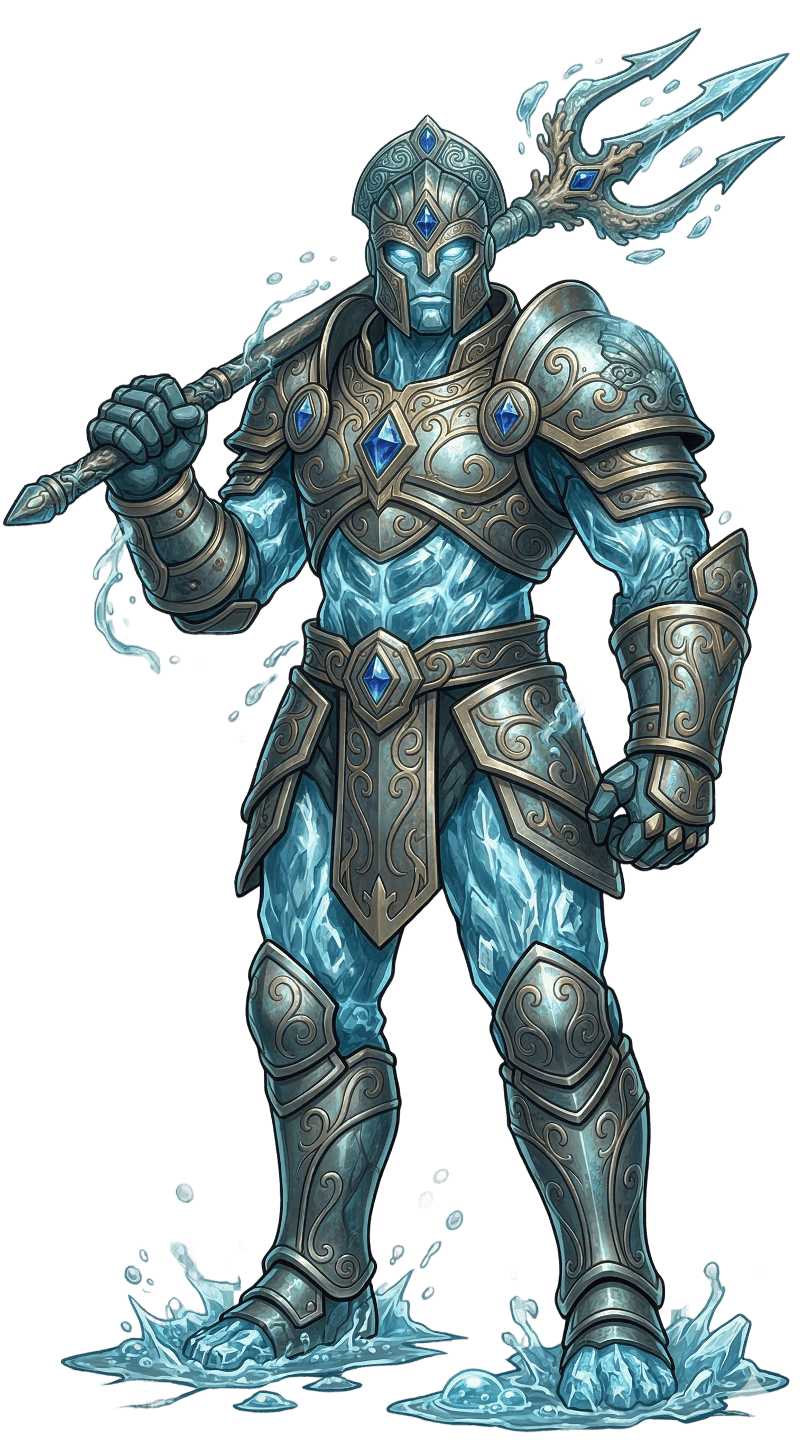
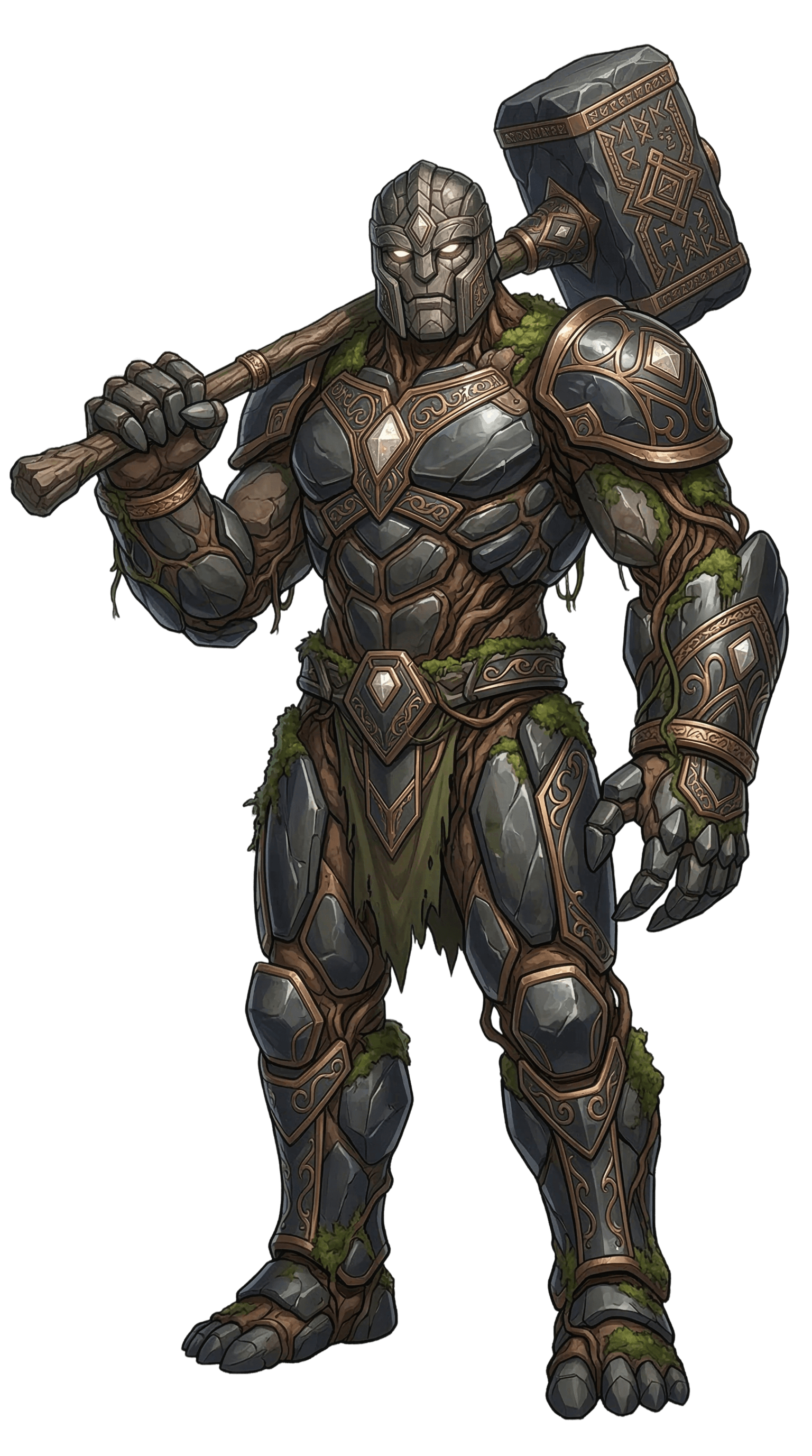
Elariam today is a blood-stained patchwork. Every stretch of road belongs to someone different each season. Warlords charge tolls on bridges they never built. Pioneers raise palisades where yesterday there was open field and charge passage to anyone who would cross. Golems, the Forge's escaped creations, occupy ruins and allow no one to enter or leave. And solitary priests wander among the wreckage, offering healing to those who can pay, whispering prophecies no one cares to hear.
Taverns are the only neutral ground that remains. Inside them, no blade may be drawn. That is the unwritten rule even the most bloodthirsty respect. It is in taverns that contracts are signed, betrayals are planned, and one-night alliances form and dissolve before breakfast.
And it is in taverns that the rumors circulate: of treasure buried beneath the old palace, of a weapon that can slay a Golem in a single strike, one that only a Forge-master could craft, of a scroll containing the ritual to reforge the lost crown. It could all be lies. But in Elariam, even lies kill. And they pay well.
Where You Come In
A village. Small, forgotten, ringed by dry earth and walls that barely hold back the wind. It is yours. No one else wanted it. The last inhabitants fled when the Golems marched north, and what remained was dust, a few huts, and a field that might still yield crops if someone had the patience to till it. You did.
Now you are lord of this scrap of nothing. It falls to you to raise walls that hold, forge alliances that outlast a season, train soldiers who will not flee at the first rumble of stone. You could seek the Order's protection and offer tribute in exchange for blades. You could hire Forge-masters to temper your steel. You could raise palisades with your own hands and turn this village into a fortress. Or you could owe no one and take by force what your neighbors cannot defend.
There is no safe path. There is no eternal kingdom. There is only the next harvest, the next wall, the next army on the horizon. And the decision you make before it arrives.
Welcome to Elariam. Your village awaits. Try not to lose it on day one.